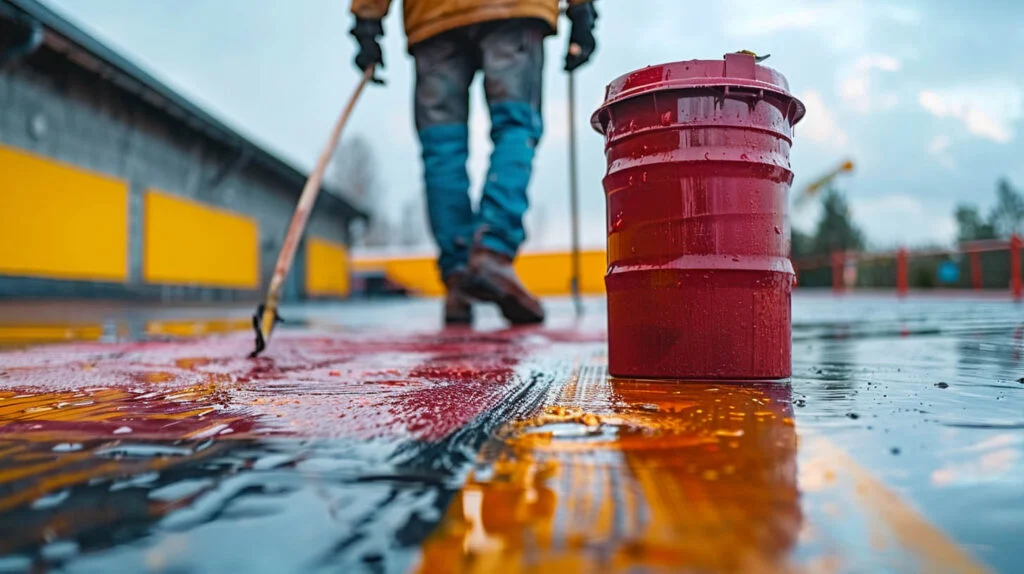

Flat roofs and standing water go together. After every heavy rain, puddles form in low spots. Some sit there for days.
Most roofing materials hate this. Water seeps into seams. Adhesives break down. Insulation gets soaked. Leaks follow.
Silicone coatings are different. They do not break down in standing water. Not in a week. Not in a year. Ever.
Why Is Ponding Water So Destructive?
Flat roofs are never perfectly flat. Insulation compresses over time. The structure settles. Low spots develop slowly.
Water collects in these spots after every storm. It presses against seams for 48 hours or more. That constant pressure finds weak points.
Asphalt products absorb moisture and fail. Many acrylic coatings soften when submerged. Seams lift. Once water gets under the membrane, insulation stays wet. Mold grows. Repair bills climb.
What Makes Silicone Different?
Silicone is waterproof at a basic chemical level. It does not absorb water. It does not soften. It does not lose grip when submerged.
Think of other coatings like a raincoat. Great in rain, but you would not swim in one. Silicone is like a wetsuit. It is built to live in wet conditions.
This is why silicone roof coatings are the top pick for flat roofs with drainage issues. The protection does not quit when water sits.
How Does the Seamless Layer Work?
Silicone goes on as a liquid. Crews spray or roll it across the whole roof. It cures into one continuous sheet.
A typical commercial roof has thousands of feet of seams. Each one can leak. The silicone layer covers them all at once.
Vents, skylights, and AC units get sealed too. These flashing points cause most leaks. Silicone wraps them in the same waterproof skin as the rest of the roof.
Can Silicone Handle Temperature Swings?
Yes. This matters a lot in places with harsh winters and hot summers.
Metal and membrane roofs expand in heat and shrink in cold. Rigid coatings crack under this movement. Silicone stretches and bounces back.
It stays flexible from deep winter cold to peak summer heat. No stress cracks. No splitting at seams after freeze thaw cycles.
Silicone vs Acrylic: Which Wins?
| Feature | Silicone | Acrylic |
| Standing water | Excellent, never breaks down | Poor, softens over time |
| UV resistance | Excellent | Good |
| Flexibility | Excellent | Good |
| Upfront cost | Higher | Lower |
| Best for | Ponding roofs | Well drained roofs |
If your roof holds water, silicone is worth the higher price. If drainage is good, acrylic can save money upfront.
How Long Will It Last?
A pro applied silicone system often carries a 10, 15, or 20 year warranty. Thickness and roof condition affect the term.
Here is the part many owners miss. When the warranty ends, you may just need a fresh topcoat. This recoat costs far less than the first job. It starts a new warranty cycle.
Done right, this cycle can repeat. Your roof stays protected for decades without a full replacement.
See also: Setting Up a Business in Georgia: The Founder’s Complete Playbook
Will It Lower Energy Bills?
Most silicone coatings are bright white. They reflect sunlight instead of absorbing it.
A dark roof can hit 150 degrees on a summer day. A white silicone roof stays far cooler. Less heat enters the building. AC runs less.
Warehouses and retail buildings see the biggest gains. The roof area is huge. Summer savings add up fast.
Is My Roof a Good Candidate?
Silicone works on EPDM rubber, TPO, modified bitumen, and metal. The roof must be structurally sound. Wet insulation must be found and fixed first.
An inspection always comes first. The contractor checks for trapped moisture. Repairs happen before coating. Good prep is what makes the job last.
If your flat roof is aging and ponding is a worry, silicone roof coatings are worth a close look. They solve the standing water problem better than any other single option.
FAQs
Does silicone really survive permanent ponding?
Yes. It does not soften or lose adhesion in standing water. This is its biggest advantage over acrylic coatings.
How long does a silicone coating last?
Typically 10 to 20 years with warranty. Recoating at the end can extend protection further at lower cost.
Is silicone more expensive than acrylic?
Upfront, yes. But on roofs with ponding, acrylic may fail early. Silicone often costs less over the long run.
Can it go over my existing roof?
In many cases yes. EPDM, TPO, modified bitumen, and metal are all common bases. Inspection confirms fit.
Does it help with cooling costs?
White silicone reflects heat well. Many owners report lower summer AC bills after coating.


 By
By