
Anyone renovating a shower faces an early fork in the road. The traditional route lays ceramic tile over a waterproofed wall. The newer route installs large PVC panels that cover the wall in a few pieces. Both produce a waterproof, attractive shower, but they get there differently, and the right choice depends on priorities the buyer needs to sort out first.
Which one deserves your money? That question has no single answer, because each option wins on different measures. Laying the strengths and weaknesses side by side makes the decision clearer than any blanket recommendation could.
Installation: speed versus skill
The starkest difference shows up during installation. Tile is a slow, skilled craft. Each piece must be set, spaced, and levelled, then grouted and sealed in a separate pass. A professional tiled shower represents days of careful work, and a DIY attempt carries a real risk of visible mistakes.
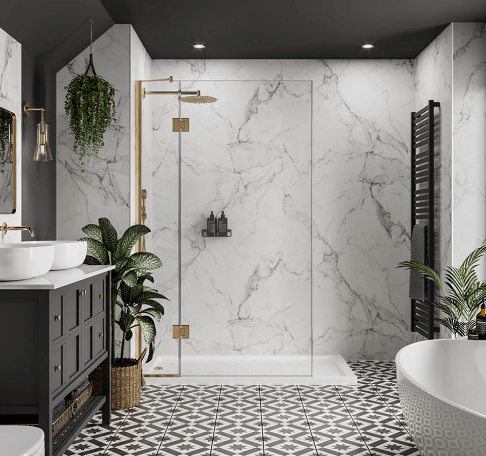
PVC panels take the opposite approach. A few large PVC shower wall panels cover an entire wall at once, cut to fit and bonded in place, often finishing a surround in a fraction of the time tile demands. For a homeowner tackling the job themselves, or anyone wanting the bathroom back in service quickly, that speed is a decisive advantage. Companies like Bath Fitter built an entire business model on the appeal of fast panel installation over slow tile work.
Maintenance: grout lines versus smooth surfaces
Here the panels press their advantage further. Tile’s grout lines are its weak point. Grout is porous, so it absorbs moisture, harbours mildew, and discolours over time unless sealed and scrubbed regularly. In a shower, that maintenance is a recurring chore that never truly ends.
PVC panels present a smooth, nearly joint-free surface with few or no grout lines to worry about. A quick wipe keeps them clean, and there is little for mildew to colonize. For a household that resents bathroom scrubbing, this difference alone can settle the debate. The panel surface simply asks for less ongoing attention than a tiled wall ever will.
Appearance and longevity: where tile answers back
Tile does not surrender the comparison, though. Its greatest strength is the look and the lifespan. A well-installed tiled shower carries a depth, texture, and quality that panels, however improved, still approximate rather than match. Natural stone and ceramic offer a tactile richness that printed panel surfaces cannot fully replicate.
Longevity favours tile too. A properly installed and maintained tiled shower can last for decades, outliving several panel installations. Tile resists heat, scratches, and fading in ways that plastic surfaces do not always match. For a homeowner planning to stay put and willing to maintain the grout, tile’s durability and premium feel remain compelling. Brands such as Onyx Collection and Swanstone have pushed solid-surface panels upmarket to close this gap, but the perception of tile as the premium choice persists.
Cost: comparing the true total
On price, the comparison is more nuanced than it first appears. The panels themselves can cost more or less than tile depending on the products chosen, so the material price alone rarely decides it. The bigger difference lives in labour.
Tile’s demanding installation adds significant labour cost when done professionally. Panels install faster, cutting that labour dramatically, which often makes the finished panel shower cheaper overall even when the panel material is not. For a DIY installer, the panel route saves both the labour cost and the skill barrier, while tile rewards those who can do the work themselves with a premium result at a material-only price.
Matching the choice to the household
The decision becomes clear once priorities are ranked. A household that values speed, low maintenance, and a straightforward installation leans toward panels. A household that prizes appearance, longevity, and a premium feel, and is willing to maintain grout, leans toward tile.
Timelines matter too. A rental unit needing a quick, durable, low-maintenance refresh suits panels well. A forever home where the owners want the finest result and will care for it accordingly suits tile. Neither choice is wrong. They simply serve different goals, and naming those goals honestly points to the answer.
Repairs, resale, and the long view
Two considerations rarely make it into the panel-versus-tile conversation, yet both matter over the years a shower serves a home. The first is reparability. When a single tile cracks, a skilled hand can often remove and replace just that piece, restoring the wall without touching the rest. When a panel is damaged, the repair usually means replacing a large section or the whole panel, since the surface is continuous.
That difference cuts both ways. Tile’s repairability rewards a homeowner who keeps a few spare tiles from the original lot, while a panel’s continuous surface means small damage can force a bigger fix. Neither is strictly better, but knowing the repair path in advance shapes a realistic expectation of what maintenance will look like down the road.
Resale perception is the second consideration. Many buyers still associate tile with quality and permanence, and a tiled shower can read as a premium feature during a sale. Panels, despite their practical strengths, sometimes carry a budget association in a buyer’s mind, fair or not. For a homeowner renovating a forever home, this matters little. For one improving a property they expect to sell within a few years, the perception can influence which choice serves the investment better. Weighing these longer horizons alongside the immediate concerns of cost and maintenance rounds out an honest comparison.
See also: Commercial Roofing with Roland’s Roofing: Reliable Solutions for Business Properties
The verdict depends on you
There is no universal winner in the panel-versus-tile debate, and anyone who claims otherwise is selling something. Panels win on speed, maintenance, and often total cost. Tile wins on appearance, longevity, and premium feel.
Sort out which of those matters most for your bathroom, your timeline, and your tolerance for upkeep, and the right choice stops being a dilemma. Both build a good shower. The better one is simply the one that fits how you actually live. Rank your priorities honestly, speed against appearance, low maintenance against premium feel, quick installation against long-term repairability, and the fog around the decision lifts. Both panels and tile build a shower that keeps water where it belongs for years. Choosing between them is less about which is objectively superior and more about knowing which strengths your household will actually notice and value day after day. Make that call with clear eyes, and the shower you install will feel like the right decision every time you step into it, whichever route you took to get there.


 By
By