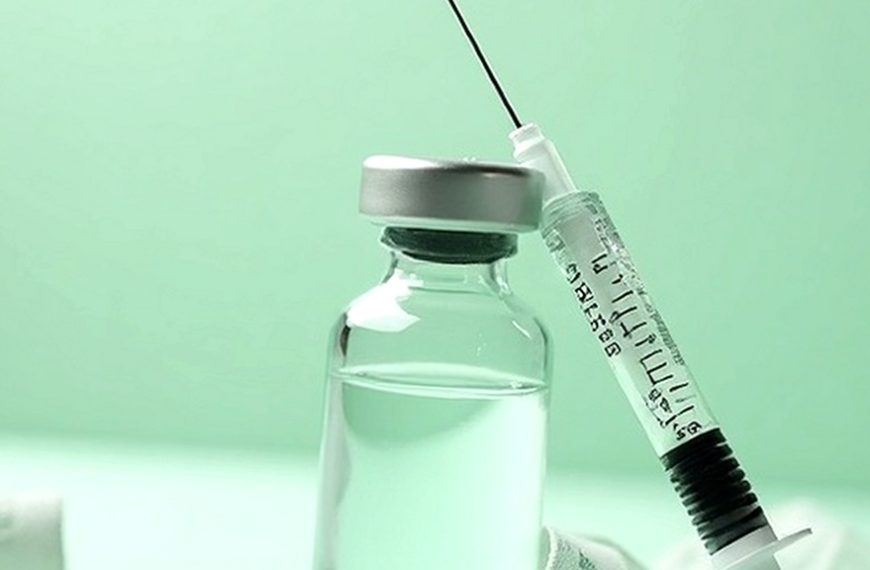

My friend texted me a photo last month: a 5 mg vial of CJC-1295, a bag of bacteriostatic water, and the caption “how many units do I draw?” He’d already found three different answers on three different forums. One of them was off by a factor of 1,000, the kind of math error that turns 300 mcg into 300 mg on paper. That’s the problem these tools exist to solve.
Here are the ten I checked this year, in order of how useful I found them.
1. FormBlends Peptide Calculator
This is the one I sent my friend. You type in three numbers: vial size in mg or mcg, how much BAC water you added in mL, and your target dose per injection. It spits out concentration per mL, exact units to draw on your syringe, and how many doses the vial contains. Clean and immediate.
What actually separates it from most tools: it shows you the arithmetic. Every step. You can follow the calculation yourself rather than trusting a black box. It also handles the mg-to-mcg conversion automatically, flagging which unit you’re working in. That conversion (1 mg = 1,000 mcg) is where most dosing errors begin.
It defaults to U-100 syringes but also covers U-50 and U-40. A visual fill bar shows you exactly where your dose sits on the barrel. One-tap presets load common vial sizes for BPC-157, TB-500, ipamorelin, tesamorelin, and GLP-1 compounds, so CJC-1295 users can adapt the 10 mg ipamorelin preset as a starting point.
The tool is free and needs no account. It’s also built into the FormBlends mobile app (iOS and Android), which adds a 55-compound library, injection-site rotation tracking, and dose logging. FormBlends is an actual 503A compounding pharmacy, not an anonymous page. That matters when you’re deciding how much to trust a tool’s math.
No dose recommendations. You bring the number your provider gave you; the calculator tells you how to measure it.
2. PeptideFox
Covers more than 30 peptides. The standout feature is BAC water volume optimization: it helps you pick a water volume that lands your dose on a clean, easy-to-read unit mark. The visual syringe guide is genuinely useful for new injectors.
3. PeptideDeck
Enter mg, BAC water volume, and target mcg. It outputs concentration, draw volume, and insulin units side by side. Minimal interface, fast math. Good for CJC-1295 and anything else lyophilized.
4. LeadWest Medical
Explicitly lists CJC-1295 alongside retatrutide, BPC-157, TB-500, ipamorelin, tesamorelin, sermorelin, and GHK-Cu. Medically adjacent branding. Straightforward input fields.
5. Outliyr
Includes BPC-157, TB-500, ipamorelin, CJC-1295, tesamorelin, GHK-Cu, and the GLP-1 peptide category. The surrounding site context is health-optimization content, which gives the calculator more explanatory framing than most.
6. MyPeptideMatch
Free. Handles BPC-157, TB-500, semaglutide, tirzepatide, and a range of other injectable compounds. Not the most granular interface, but the breadth is useful if you’re running multiple compounds simultaneously.
7. peptidereconstitutecalculator.com
BPC-157 focused, mcg-to-units on a U-100 syringe. Narrow scope. If BPC-157 is your only concern and you want something purpose-built, it works. For CJC-1295, the math is identical, so you can still use it.
8. Prime Peptides Calculator
Attached to a vendor. The math tools vendor-side calculators offer are often perfectly accurate. Just know whose site you’re on.
9. peptides.org Dosage Charts
Not a calculator. Static reference charts for common compounds. Useful as a cross-check or for understanding typical dosing ranges in the literature. Not interactive.
10. Manual Spreadsheet (Build Your Own)
The formula is public knowledge. Concentration (mcg/mL) = total mcg in vial divided by mL of BAC water added. Units to draw = (target dose in mcg divided by concentration) multiplied by 100. Any spreadsheet handles it. Time-consuming to set up, but you own every assumption.
Quick Comparison
| Tool | CJC-1295 Support | Syringe Types | Free | App |
| FormBlends | Yes (preset adaptable) | U-100, U-50, U-40 | Yes | Yes |
| PeptideFox | Yes (30+ peptides) | U-100 | Yes | No |
| PeptideDeck | Yes | U-100 | Yes | No |
| LeadWest Medical | Yes (listed explicitly) | U-100 | Yes | No |
| Outliyr | Yes | U-100 | Yes | No |
| MyPeptideMatch | Yes | U-100 | Yes | No |
| peptidereconstitutecalculator.com | Math applies | U-100 | Yes | No |
| Prime Peptides | Yes | U-100 | Yes | No |
| peptides.org charts | Reference only | N/A | Yes | No |
| Manual spreadsheet | Any | Any | Free to build | No |
FAQ
Why does changing BAC water volume affect units drawn but not the actual dose?
Adding more water dilutes the concentration. Your target dose in mcg stays the same; you just draw a larger volume to get there. The math corrects for it automatically, which is exactly why a calculator beats eyeballing it.
Can I use a BPC-157 calculator for CJC-1295?
Yes. The reconstitution formula is the same for any lyophilized peptide. Vial size in mcg divided by mL of water equals mcg per mL. Peptide identity doesn’t change the arithmetic.
What’s the most common mistake these tools prevent?
The mg-versus-mcg confusion. Someone types “300” thinking mcg but their vial is labeled in mg, or vice versa. That’s a 1,000x error. Tools that force you to specify units (and show the conversion) catch it before it becomes a problem.
Do any of these tools tell me what dose to take?
None of the reputable ones do. They take the dose your provider gave you and convert it into a measurable syringe volume. Dosing decisions belong with a qualified clinician.
Is a free web calculator accurate enough to trust?
The math is simple enough that accuracy isn’t usually the variable. The risk is user input error and unit confusion. Tools that show their work, like the FormBlends calculator, let you verify the output yourself rather than accepting it on faith.
Sources
- U-100 insulin syringe standard: FDA device classification records and standard pharmaceutical labeling (100 units per 1 mL)
- Peptide reconstitution mathematics: general compounding pharmacy reference literature
- Tool features: direct inspection of each tool’s public interface, 2025-2026
- FormBlends product details: FormBlends brand public documentation

 By
By